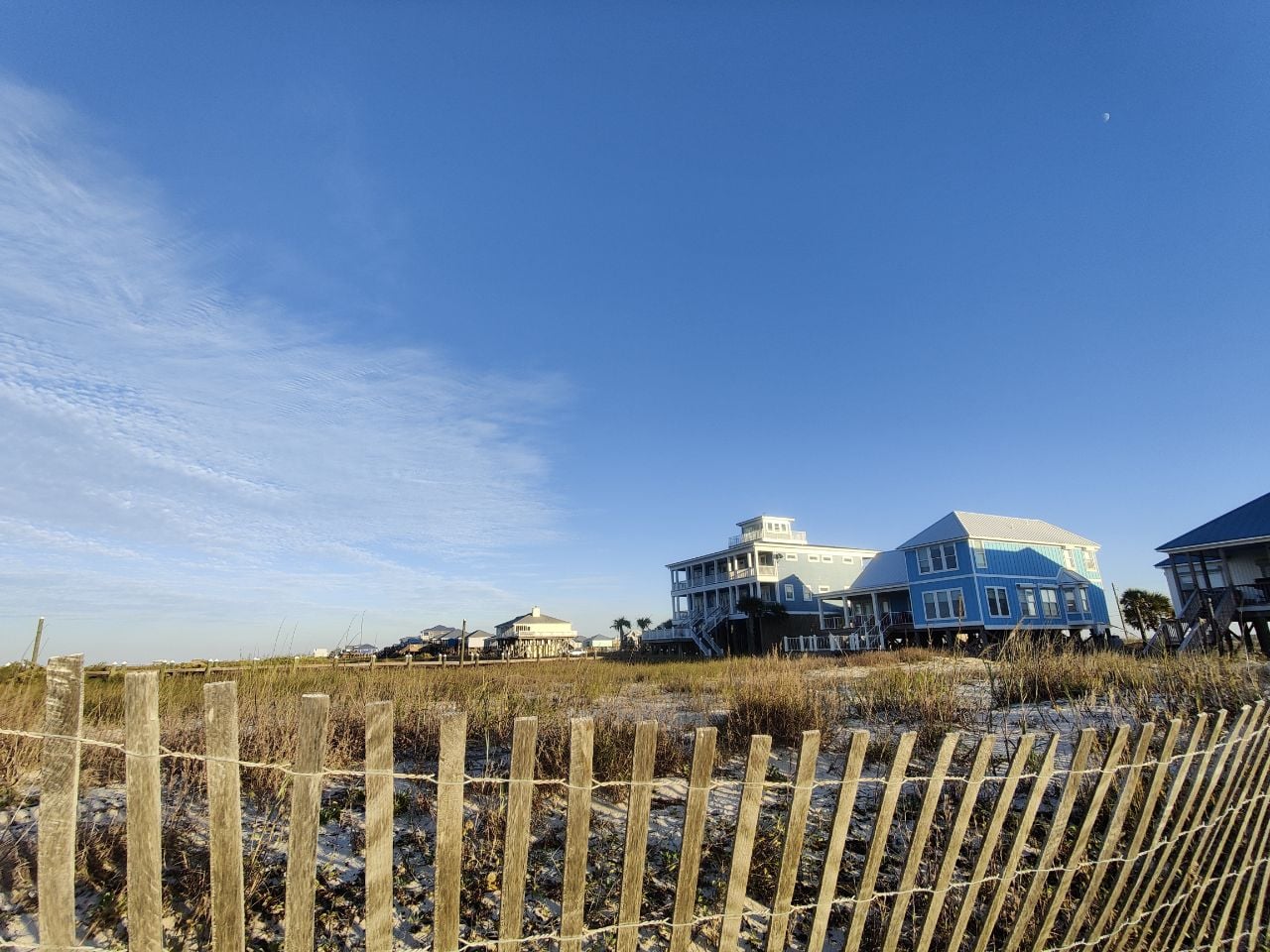
Dauphin Island sits at the western edge of our Gulf Coast corridor — a 14-mile barrier island at the mouth of Mobile Bay with a Civil War fort, one of the best birding spots in North America, excellent shelling, and some of the most uncrowded beaches between here and Panama City Beach. If you're looking for the Gulf Coast with the resort infrastructure stripped away, this is it.
Why Dauphin Island
Most Gulf Coast travelers drive straight to Gulf Shores, Orange Beach, or Destin. Dauphin Island sits 30 miles south of Mobile on the same stretch of Alabama Gulf coastline, and most of those travelers have never heard of it — which is exactly why it works for the people who have.
The island has a small permanent population (~1,200 residents), very limited commercial development, and an atmosphere that feels more like a fishing village than a beach resort. There are no high-rise condo towers. There is one main road. The beach has room on it. The fishing is excellent. And the Audubon Bird Sanctuary on the western end of the island is one of the most remarkable free natural experiences on the entire Gulf Coast.
What Dauphin Island isn't: a destination for people who want restaurants on every block, nightlife, resort amenities, or a packed activities calendar. The dining options are limited and the island shuts down early. Come for the nature, the quiet, and the genuinely uncrowded Gulf beach. Leave for dinner in Mobile if you need variety.
The Beach
Dauphin Island has both a Gulf-side beach and bay-side access to Mobile Bay — two very different water experiences. The Gulf side delivers the white sand and warm water you expect from Alabama's coast, though the sand here has slightly more of a brown-gold cast than the ultra-white quartz of Gulf Shores. The water is clear and calm in typical conditions, with the gentle Gulf slope that makes it safe for families with young children.
- East Beach (Public Beach Park): The main public beach access with parking, pavilions, and restrooms — the starting point for most first-time visitors
- West end beaches: Less developed, more natural, accessible by driving or cycling west on Bienville Boulevard toward the Audubon sanctuary — these are the beaches with real solitude
- Shelling: Dauphin Island is consistently one of the better shelling spots on the Alabama coast, particularly after storms and during king tide events. See our Gulf Coast shelling guide for what to look for.
Fort Gaines
Fort Gaines is a remarkably intact Civil War fortification at the eastern tip of Dauphin Island, overlooking the entrance to Mobile Bay. The fort played a central role in the Battle of Mobile Bay (August 1864) — the engagement famous for Admiral Farragut's order to “Damn the torpedoes, full speed ahead.” The Confederate garrison surrendered here shortly after that battle.
The fort is open to visitors and remarkably well-preserved: original brick walls, cannon emplacements with original guns, a museum with Battle of Mobile Bay artifacts, and views across the bay entrance that make the strategic importance of the position immediately clear. It's one of the better historical sites on the Gulf Coast and admission is inexpensive.
The ferry landing at Fort Gaines connects to Fort Morgan on the Baldwin County shore — a 40-minute ferry crossing that saves a 2-hour drive around Mobile Bay and delivers you directly into the Gulf Shores/Orange Beach area.
Audubon Bird Sanctuary
The Dauphin Island Audubon Bird Sanctuary covers 164 acres on the western end of the island and is one of the most significant migratory bird stopover sites in North America. During spring migration (April–May), exhausted songbirds crossing the Gulf of Mexico from Central America make landfall here — their first North American soil after an 18-hour non-stop flight over open water. The concentration of warblers, tanagers, orioles, and other neo-tropical migrants that descends on this sanctuary during peak migration events has to be seen to be believed.
Even outside peak migration, the sanctuary hosts a remarkable diversity of resident and wintering birds. The sanctuary's freshwater lake, maritime forest, and Gulf beach edge create multiple habitat types in a small area. Trail access is free and open daily.
- Best for migrants: Late April–early May (spring), late September–October (fall)
- Year-round residents: Shorebirds, wading birds, raptors, waterfowl
- Facilities: Walking trails, observation platforms, restrooms; no fee
Dauphin Island Estuarium
The Dauphin Island Sea Lab operates a public aquarium and estuarium focused on the coastal ecosystems of the northern Gulf of Mexico — Mobile Bay, salt marshes, barrier island habitats, and open Gulf waters. It's a genuinely good small aquarium with exhibits that feel educational rather than purely commercial, well-suited for families with curious kids. Admission is modest and the live animal exhibits include creatures specific to this part of the Gulf that you won't see at chain aquariums.
Fishing on Dauphin Island
Fishing is one of the primary reasons people come to Dauphin Island, and the variety is exceptional. The island sits at the confluence of Mobile Bay's outflow, the Intracoastal Waterway, and open Gulf water — giving anglers access to very different fisheries within a small area.
- Surf fishing (Gulf side): Pompano, whiting, redfish, speckled trout — accessible from the beach with no boat required
- Bay fishing: Some of the best speckled trout and redfish action in Alabama, especially in the grass flats on the north side of the island
- Pier fishing: The Dauphin Island Fishing Pier provides access to deeper water; fee required
- Charter fishing: Inshore and nearshore charters operate from the marina; the proximity to the Gulf of Mexico passes makes offshore access quick
Getting to Dauphin Island
Dauphin Island is accessible by two routes:
- Dauphin Island Parkway (from the north): The main route from Mobile — about 30 miles south of downtown Mobile on Highway 193. Take I-10 to the Dauphin Island Parkway exit and drive south across the bridge to the island.
- Fort Morgan Ferry (from the east): If you're coming from Gulf Shores or Orange Beach, the Mobile Bay Ferry runs between Fort Morgan (Baldwin County) and Fort Gaines (Dauphin Island). The crossing takes about 40 minutes and runs daily (seasonal schedule — check ferry website for current times and fares). This is the scenic option and saves a long drive around the bay.
The nearest airport is Mobile Regional (MOB) — about 45 minutes to the island. Pensacola (PNS) is also an option at about 90 minutes.
Where to Stay
Dauphin Island accommodation runs almost entirely on vacation rentals — beach houses and cottages that reflect the island's residential character. There are no large resort hotels and no condo tower complex. What you get instead are Gulf-view and bay-view homes ranging from modest fishing cottages to more upscale beachfront properties, all at prices significantly below comparable Gulf Shores or Florida Panhandle rentals.
This is part of the appeal for families looking for a week-long escape that doesn't cost what Gulf Shores or Destin would. A Gulf-view house that would run $4,000/week in Gulf Shores in peak summer often runs $1,800–2,400 here.
What Dauphin Island Lacks (Be Honest With Yourself)
Dauphin Island is not the right choice for every traveler. Before you book, be clear about what you're getting:
- Dining: Very limited — a handful of restaurants, and options are sparse outside of the immediate marina area. Plan to cook most meals in your rental or make a drive to Mobile for dinner.
- Activities infrastructure: No water park, no elaborate mini-golf, no strip of activity operators. Nature, fishing, and the beach are the programming.
- Nightlife: There is none. This is not a criticism — it's part of the character.
- Shopping: Minimal. Bring what you need.
If those limitations sound like features rather than drawbacks, Dauphin Island is your beach. If you need resort-level amenities and a packed activities menu, Gulf Shores is 90 minutes east and delivers all of that.
Best Time to Visit
- April–May: Migration season for birds + beach weather arriving; the most interesting time for nature visitors
- June–August: Peak summer — beach is busy by Dauphin Island standards (which means less crowded than anywhere else on the Gulf)
- September–October: Fall migration, warm water, minimal crowds, lower prices; an excellent window
- November–March: Quiet, cool, primarily a fishing and birding destination in winter; cheapest rates of the year