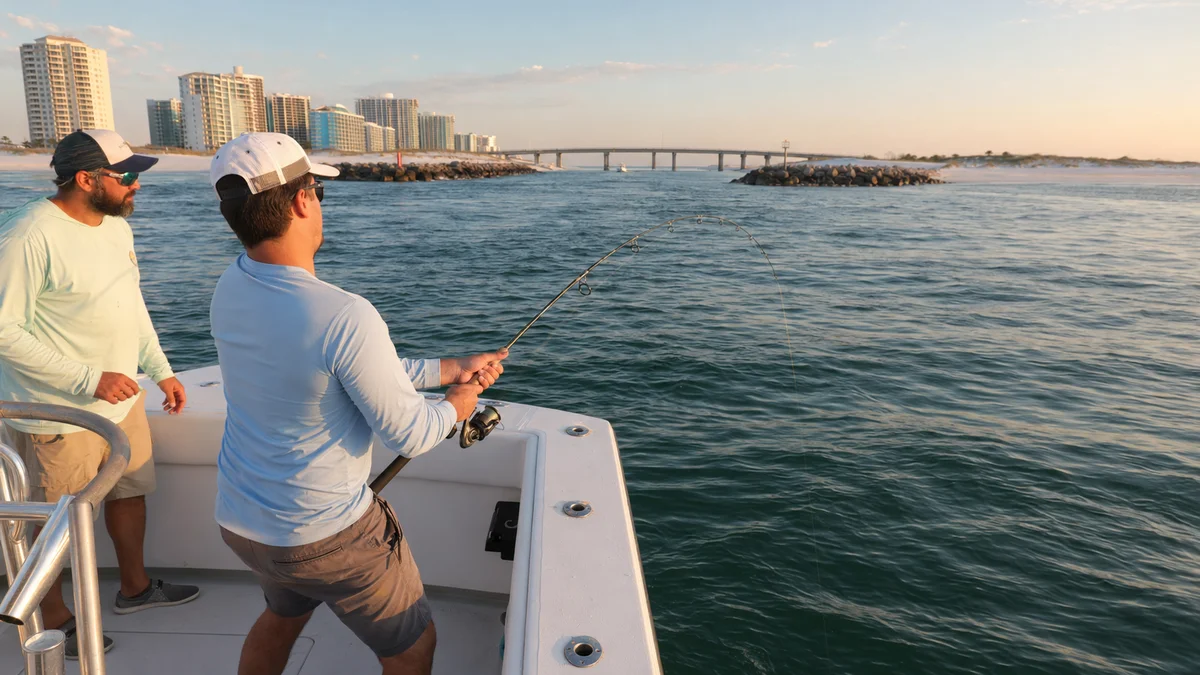
The first fish can turn a quiet boat into a small celebration. Someone calls for the net, the captain clears a line, and the person who came along for the boat ride suddenly wants another turn.
That's the fun of Gulf Coast fishing. You can spend a peaceful morning casting from Dauphin Island, take a child onto a Gulf pier, or head offshore from Destin for red snapper — each requires a different amount of time, money, and tolerance for waves. My father-in-law, Captain Mike, has spent years hunting and fishing, and being around him taught me that fishing stops being intimidating the moment someone explains what the equipment does. This guide covers the coast from Dauphin Island to Panama City Beach.
Start by Choosing Your Kind of Fishing
"Deep-sea fishing" dominates the advertisements, but many first-timers have a better day inshore or on a pier:
- Surf fishing — casting from the beach for pompano, whiting, redfish, and flounder. Cheapest entry if you have gear; a long surf rod, sand spikes, and pyramid sinkers help. Go early, before swimmers arrive.
- Pier fishing — the easiest independent option: stable platform, rentals and bait on site, regulars nearby. License arrangements vary by pier, so confirm before arriving.
- Inshore / back-bay — protected bays and sounds for redfish, speckled trout, flounder, and sheepshead. My first recommendation for families and anyone unsure about seasickness: calmer water, less travel time, real fishing in four hours.
- Nearshore — reefs and wrecks close to shore; trolling for mackerel or bottom-fishing snapper. A step up in ride and reward.
- Offshore / deep-sea — the long runs for snapper, grouper, amberjack, tuna, and mahi. The advertised duration includes hours of travel; save it until you know how your body handles open water.
Where to Fish Along the Gulf Coast
Dauphin Island — my favorite local beach, partly because its fishing culture still feels like everyday island life. Shoreline and bay fishing, launches, the pier at East End Park, and charters around Mobile Bay. (The old 850-foot pier is now on dry land — Pelican Island migrated into it — so use East End Park for over-water fishing.)
Orange Beach and Gulf Shores — Alabama's main charter hub, from back-bay trips to long-range bluewater runs. Gulf State Park Pier is the easiest no-boat start: open around the clock with rentals, bait, and accessible rail fishing — but buy your Alabama saltwater license before arriving, because the pier doesn't sell them.
Pensacola Beach and Navarre — protected inshore water in the bay and Sound, the rod-rental-friendly Gulf Pier, Fort Pickens' bay pier, and the long Navarre Beach Pier. Ideal for combining one fishing morning with a broader beach trip.
Destin and Fort Walton Beach — the biggest charter concentration on this stretch: private, shared, party boats, and long-range vessels, with East Pass putting boats in open water fast. The Island Pier covers the no-boat option. Check the exact marina — some "Destin" trips depart elsewhere.
30A — Grayton Beach's charters launch directly from the sand, one of the coast's most distinctive fishing experiences (ask how boarding works if mobility is a concern). Panama City Beach — charters from Grand Lagoon, two Gulf piers, and St. Andrews State Park's jetties make it a strong all-around first-timer base.
Know What You Can Catch Through the Year
A fish can be present while harvest is closed — "in season" sometimes means a strong bite and sometimes a legal harvest window. Confirm both. Roughly: winter pushes fish deep (sheepshead stack on structure; trout and redfish stay inshore) and suits short, uncrowded charters. Spring is the most varied stretch — pompano on the beaches, cobia migrating, Spanish mackerel returning; surf fishing is at its most approachable. Summer is peak charter season, headlined by red snapper, whose season changes by year, state, and permit type — book early and confirm with the captain. Fall is my favorite: cooler mornings, thinner crowds, redfish and flounder inshore, mackerel hanging on, and blackfin tuna offshore.
Understand Licenses (Alabama vs. Florida)
Rules change often — check the official state agency right before fishing. Alabama generally requires a saltwater license (under-16 and resident 65+ exempt); charter passengers are covered by the boat's license; reef fish need the Reef Fish Endorsement; Gulf State Park Pier needs license + pier permit. Florida requires a saltwater license even for catch-and-release; nonresidents need one to fish independently from beach, pier, kayak, or private boat (the free shoreline license is residents-only); charter passengers are covered; private vessels targeting reef fish need the free State Reef Fish Angler designation; and shore-based shark fishing requires its own course and permit. State waters extend nine nautical miles; beyond that, federal permits govern what a charter can keep — your captain should explain what's legal on the day.
Book the Right Charter
A captain who regularly teaches beginners beats a long list of trophy species. Read recent reviews for communication, patience with kids, and deckhand help. Private charters buy flexibility; shared trips split a small boat's cost; party boats are the cheapest route into reef fishing. Before paying, confirm: departure marina, passenger count, travel time, realistic targets, current seasons, license coverage, gear and bait, shade and restroom, child life jackets, fish-cleaning policy, and the weather-cancellation terms. Book early in the vacation so a windy day can be rescheduled — and remember no operator can guarantee a fish.
Prepare for a Comfortable Day
Bring polarized sunglasses, a secure hat, sun-protective clothing, grippy shoes, captain-approved sunscreen, water, snacks, a small dry bag, cash for gratuity, and an empty cooler left in the car for fillets. For seasickness: start inshore or on a bigger boat, talk to a pharmacist about medication before the trip, sleep well, eat light, stay in fresh air, and watch the horizon. Kids under 13 generally must wear a life jacket underway on federal waters — ask about child sizes when booking. Several restaurants in Orange Beach, Destin, and PCB will cook your catch (call first). I usually judge a seafood kitchen by its shrimp po'boy, but a fish you watched come over the rail that morning has a satisfaction no comparison can match.
The Bottom Line
Start with a four-hour inshore charter for instruction and calm water, a pier for the cheapest introduction, a party boat for affordable reef fishing — and save the long offshore day for when you know your group can handle it. Orange Beach and Destin have the widest charter selection; Dauphin Island is the quiet local experience; Pensacola, Fort Walton, 30A, and PCB mix charters with great pier and surf access. Tell the captain you're a beginner and let the crew teach you — the moment that first line starts moving, all the licenses and vocabulary begin to make sense. Planning the trip around it? Our best-time guides cover the seasonal calendar for every destination.